 Войти
ВойтиUAE air defenses actively intercepting Iranian missiles, drones, country's Defense Ministry says
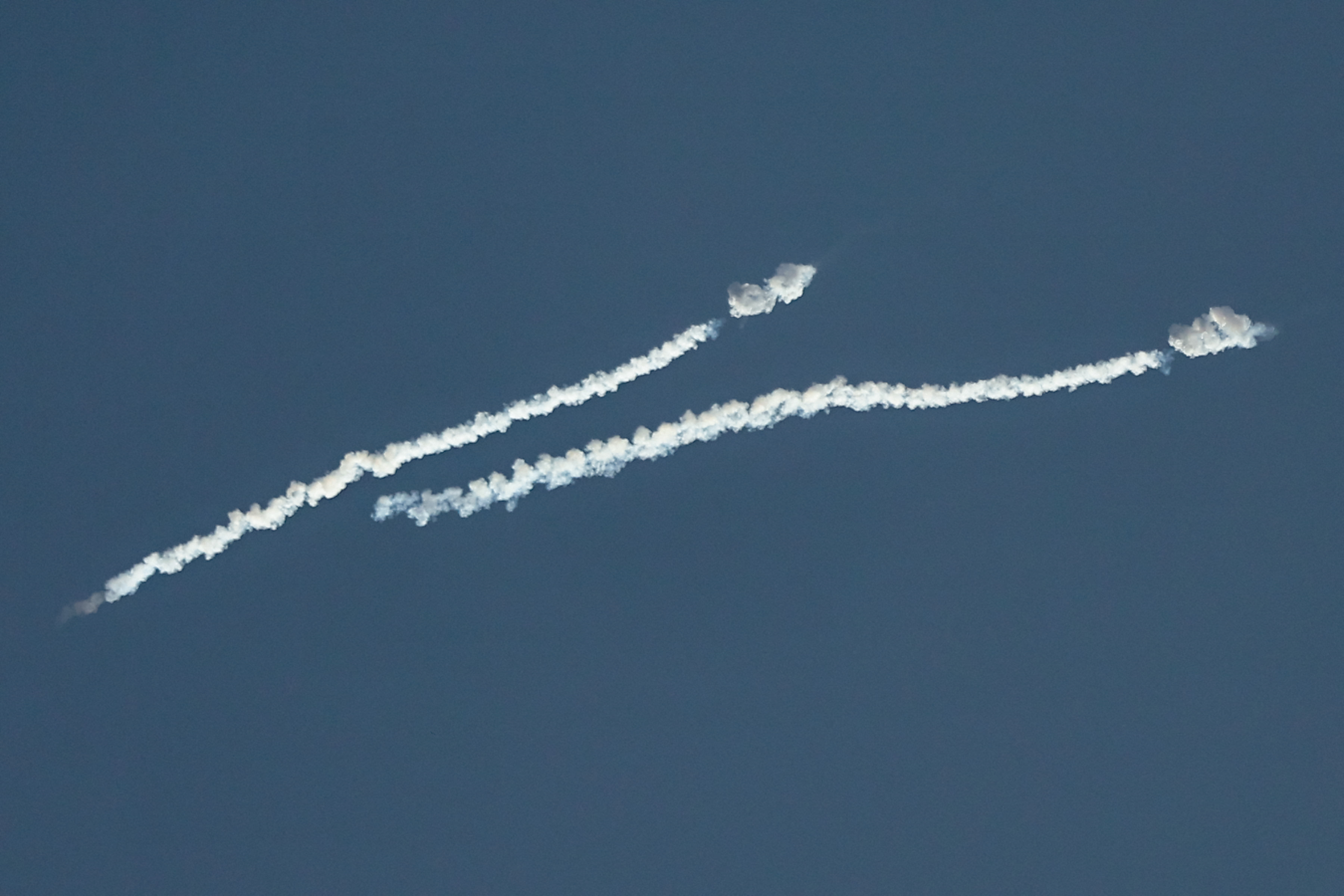
On Monday, three indian citizens were moderately wounded in an Iranian drone attack on the UAE's Fujairah oil industry complex.







With this authorization, the vaccine can now be incorporated into the country’s public healthcare network, the SUS. It is indicated for people aged 18 to 59 who have been exposed to the virus.
“This is another important milestone for the Butantan Institute and for public health. By carrying out most of the manufacturing process, the institute, as a public institution, will be able to deliver the vaccine at a lower, more affordable price, with the same quality and safety,” said the institute’s director, Esper Kallás.
At least 4,000 volunteers, aged 18 to 65, received the vaccine in the United States and were evaluated. According to results published in the medical journal The Lancet in 2023, 98.9 percent of participants produced neutralizing antibodies.
The vaccine was well tolerated and showed a favorable safety profile, with adverse events that were generally mild to moderate, most commonly headache, body aches, fatigue, and fever.
In February 2026, the vaccine began to be administered through the SUS in municipalities with high disease incidence, as part of a pilot strategy by the Ministry of Health. In addition to Brazil, the chikungunya vaccine has been approved in Canada and Europe.
The chikungunya virus is transmitted by the bite of the Aedes aegypti mosquito, which also transmits dengue and Zika.
The disease can cause sudden-onset fever (above 38.5°C) and severe pain in the joints of the feet and hands - such as the fingers, ankles, and wrists. Other common symptoms include headache, muscle pain, and red spots on the skin.
According to the Pan American Health Organization, 500,000 cases of chikungunya were reported worldwide in 2025.
In Brazil, more than 127,000 cases and 125 deaths were reported in the same year, according to the Ministry of Health.
The disease causes chronic joint pain, which can last for months to years and severely affect quality of life.







The company noted it was able to bring forward the start of operations by three months.
The P-79 is the eighth platform in operation in the Búzios Field. With this addition, production in the field will rise to approximately 1.33 million barrels of oil per day.
The operation is planned to export gas to the mainland via the Rota 3 gas pipeline. It will add up to 3 million cubic meters (m³) of gas per day to the country’s supply.
The platform was completed in South Korea and reached Brazil in February. It arrived with a Petrobras team on board to begin assembly and commissioning procedures, in order to accelerate the start of production.
The same process had already been carried out with the P-78, also located in the Búzios Field, which began operations in December 2025.
P-79 forms part of the so-called Búzios 8, an oil production module that includes 14 wells, 8 of which are production wells and 6 are injection wells - used to maintain reservoir pressure and push the oil toward the production wells. In addition to the P-79, seven other platforms operate in the Búzios Field.
Discovered in 2010, the Búzios Field has the largest oil reserves in the country. Last year, it surpassed 1 million barrels of oil produced per day.
Búzios is located 180 kilometers off the coast of Rio de Janeiro, with the reservoir lying at a depth of 2,000 meters.
Petrobras plans to add four platforms to the field in the coming years. Three of them are already under construction (P-80, P-82, and P-83), and the fourth is in the bidding process.
Oil and gas production in Búzios is carried out by a consortium in which the Brazilian state-owned company is the operator. The other members are the Chinese companies CNOOC and CNODC, and Pré-Sal Petróleo S/A (PPSA), a federal state-owned company representing the Brazilian government.
