Вид для чтения

Появились новые статьи. Нажмите, чтобы обновить страницу.

Amazon Fund: Forest production chains to receive BRL 96.6M

Logo Agência Brasil

Natural resource production chains in the Amazon - such as cupuaçu and açaí fruits and pirarucu fish - will receive investments of BRL 96.6 million through the Forests and Communities: Living Amazon program, announced on Tuesday (Dec. 9) in Brasília.

The initiative by the National Supply Company (Conab) will be carried out with resources from the Amazon Fund and with support from the Ministries of the Environment and Climate Change and Agrarian Development and Family Farming.

Notícias relacionadas:

The program will be implemented over two years with the aim of expanding the supply of forest products to the consumer market, diversifying the regional menu through the National School Feeding Program (PNAE), and increasing the supply of foods originating from socio-biodiversity and family farming to the Food Acquisition Program (PAA).
09/12/2025 - Brasília - Conab e BNDES lançam ‘Amazônia Viva’ para viabilizar o escoamento de produtos da floresta a mercados consumidores. Foto: CONAB09/12/2025 - Brasília - Conab e BNDES lançam ‘Amazônia Viva’ para viabilizar o escoamento de produtos da floresta a mercados consumidores. Foto: CONAB
The Forests and Communities: Living Amazon program, announced on Tuesday (Dec. 9) in Brasília - Conab

“It is a legacy that we in the Brazilian government need to leave to the forest peoples. Socio-biodiversity products need to be promoted and deserve the visibility that other products important to Brazil’s economy have,” said Conab President João Edegar Pretto.

The initiative will cover 32 projects from cooperatives and associations in the Legal Amazon region, bringing together foresters, aquaculturists, extractivists, artisanal fishers, indigenous peoples, and quilombola communities.

Each proposal may receive investments of up to BRL 2.5 million for the acquisition of equipment and infrastructure aimed at boosting the commercialization of forest products in consumer markets.

The funds will be transferred to the program by the National Bank for Economic and Social Development (BNDES), which manages the Amazon Fund. According to BNDES’ socio-environmental director, Tereza Campello, the investment was made possible by a major effort to reduce deforestation and restructure the fund’s resources, allowing for investments that will total BRL 2.2 billion in 2025.

“This Conab initiative represents almost BRL 100 million for a strategic agenda that will reach our communities and also enable a platform where we will have all the socio-biodiversity data available in the Amazon in a professional and organized manner,” concluded Tereza Campello.

Makers of Amazonian soup tacacá are now Brazil’s cultural heritage

Late in the afternoon and served piping hot in a gourd, the tacacá soup is a must-have dish across Brazil’s Amazonian cities.

Made from cassava, dried shrimp, and jambu – the tingling plant – the dish has indigenous origins and is prepared by tacacazeiras, or tacacá makers.

Now, the craft of these cooks, who are guardians of the recipe, has been recognized as cultural heritage of Brazil by the National Institute of Historic and Cultural Heritage, IPHAN.

In general, tacacá recipes are family secrets passed down from generation to generation. Each has its own way of balancing the alkalinity of the starch with the acidity of the tucupi, seasoned with chicory, basil, and even garlic, varying from vendor to vendor.

Once registered as heritage, it is up to the institute to develop a plan to safeguard it. The measure should include ways to promote the cuisine, manage small businesses, access raw materials, and improve points of sale.

A source of pride

At 71 years old, Maria de Nazaré, also known as Aunt Naza, says she learned how to make the dish from her grandmother and her mother. For 15 years, selling it in Manaus has been her main source of income.

“Tacacá has always been part of my life. I used to sell it late in the afternoon, after work, outside my house. I raised two grandchildren who became lawyers, two who became doctors, and one who became a journalist,” she recounted.

Nazaré was in Brasília this week and attended the IPHAN meeting that made the craft a national heritage. She celebrated the decision.

“Being a tacacá maker means taking pride in our unique ingredients. Amazonian cuisine is alive, powerful, and deserves to be celebrated,” she declared.

Over the years, tacacá broth has undergone variations. It came to be served with crab, popcorn, and even in a vegan version, with heart of palm or olives.
 

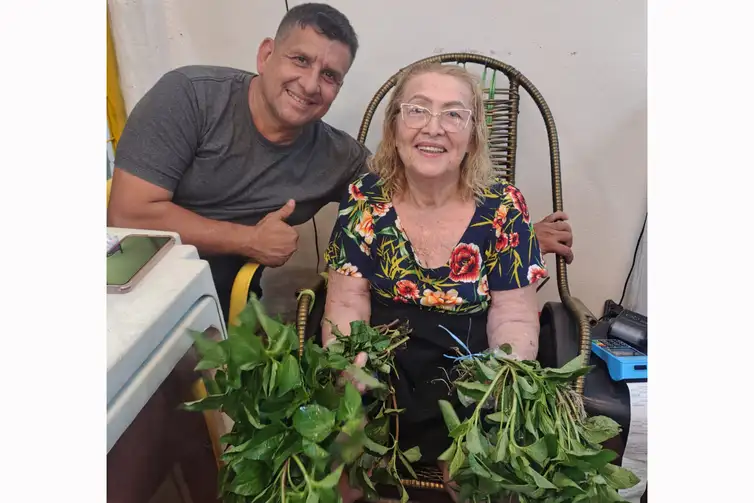
Belém (PA), 26/11/2025 - Prato regional Tacacá. Tacacazeira Maria de Nazaré Oliveira com folha de jambu. Foto: Tia Naza/Arquivo PessoalBelém (PA), 26/11/2025 - Prato regional Tacacá. Tacacazeira Maria de Nazaré Oliveira com folha de jambu. Foto: Tia Naza/Arquivo Pessoal
Tacacá maker Maria de Nazaré Oliveira, also known as Aunt Naza, holding jambu leaves - Tia Naza / Personal archive

Research

To make the craft of the tacacá makers listed as cultural heritage, the institute organized a research and documentation project on the tradition involved in preparing the dish as well as related knowledge, from purchasing ingredients to marketing. 

The work was carried out in partnership with the Federal University of Western Pará (UFOPA). The team visited seven Brazilian states, documenting and hearing from cooks about the registration.

In the file that supported the decision to include the craft in the Livro dos Saberes (“Book of Knowledge”), experts from the institute say that tacacá makers are “keepers of knowledge and secrets” and continue “not only the methods of preparing an elaborate dish, but also forms of sociability.” 

These women, the document goes on to say, are also responsible for passing on “exclusive knowledge,” step by step, so that the practice is not lost.

History

Tacacá is a traditional indigenous dish, but its commercialization was first recorded in the late 19th century, with urban expansion in the region and labor shortages.

At that time, women began selling food on the streets as a strategy for survival, balancing household duties with earning a living.

❌