Вид для чтения

Появились новые статьи. Нажмите, чтобы обновить страницу.

Indigenous leaders in Brazil call for areas free from oil drilling

Logo Agência Brasil

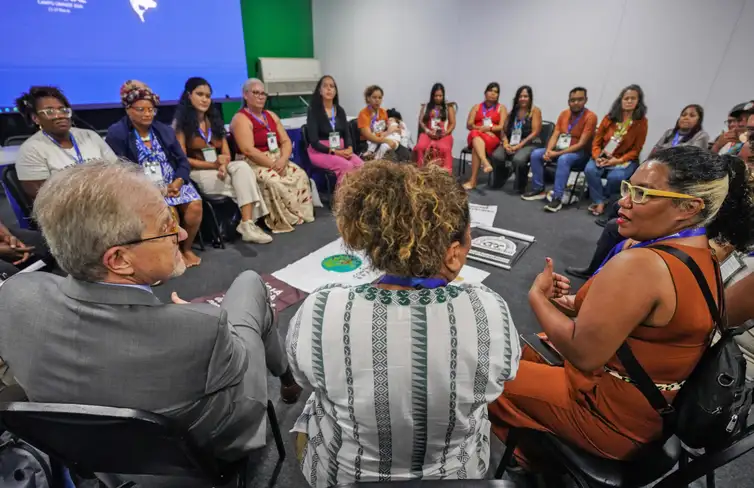
Indigenous leaders present at the Free Land Camp (Acampamento Terra Livre) demonstration in Brasília on Thursday (Apr. 9) delivered a document to representatives of the Ministry of Foreign Relations proposing the creation of zones free from oil and gas exploration in Brazil and the inclusion of indigenous territories at the center of the global climate strategy.

These fossil fuel–free zones, demonstrators say, would be areas off-limits to exploration in regions of high ecological and cultural significance.

Notícias relacionadas:

In general terms, the letter outlines recommendations concerning the “global roadmap” for the energy transition, which was proposed by the Brazilian government at the recent COP30 and has yet to gain consensus. “There can be no just energy transition without safeguarding our territories,” stated Dinamam Tuxá, executive coordinator of the Articulation of Indigenous Peoples of Brazil (APIB), which organizes the rally.

The demarcation and protection of indigenous lands are concrete measures to address the climate crisis, he argued.

“By ignoring this, the world chooses to maintain a model that destroys life. Recognizing indigenous leadership paves the way for a more balanced, diverse, and truly sustainable future.”

Changes

The document signed by indigenous leaders and submitted to the Brazilian government aims to influence international negotiations and contribute to the creation of a new development paradigm.

“Addressing the climate crisis requires not only technological changes, but also a profound redefinition of the relationships between the economy, territory, and rights,” APIB reported.

The letter calls for an immediate end to the development of new oil, gas, and coal fields, as well as the creation of a binding global agreement for the phased elimination of fossil fuels.

“The climate crisis is already affecting food production, health, the economy, and the security of nations. The cost of inaction grows every day,” the organization points out. In the view of its representatives, it is essential that their territories be recognized as priority areas for climate protection and biodiversity conservation.

Examples

The entity argues that the initiative is in line with international examples – such as Ecuador’s decision to halt oil exploration in Yasuní National Park and restrictions adopted in other Latin American countries.

The proposal also emphasizes that a just energy transition depends on the full recognition of the rights of indigenous peoples – including the right to free, prior, and informed consultation.

Data presented in the document show that indigenous territories have significantly lower rates of deforestation and play a central role in protecting ecosystems and global climate stability.

Since last Sunday, the Free Land Camp demonstration has been bringing together indigenous people from various ethnic groups in Brasília. Organizers estimate around 8 thousand people are in attendance.

Brazil unveils national plan for bioeconomy

Logo Agência Brasil

The Brazilian government on Wednesday (Apr. 1) presented a new strategy to make biodiversity one of the country’s main economic assets for development by 2035. The National Bioeconomy Development Plan (PNDBio) is expected to encompass everyone from extractive workers to industry.

Among the goals are expanding payments for environmental services, incorporating new herbal medicines into Brazil’s national public health care network – the SUS – and granting new conservation units to promote ecotourism.

Notícias relacionadas:

The plan is organized into three pillars – socio-bioeconomics and environmental assets, competitive bioindustrialization, and sustainable biomass production.

Carina Pimenta, national secretary for the bioeconomy at the Ministry of the Environment and Climate Change, notes that this is a national development strategy that views environmental assets not only from the perspective of conservation, but also in terms of how to utilize them within economic activities, “generating a new cycle of prosperity.”

According to Minister of the Environment and Climate Change Marina Silva, the bioeconomy envisioned for Brazil is for everyone.

“There is a place for extractive industries, for cosmetics manufacturers, and for pharmaceutical companies. This is bioeconomy for a new cycle of prosperity,” she added.

Salvaterra (PA), 09/10/2025 - Valter dos Santos Barbosa, conhecido como Coroa, é um dos trabalhadores que fazem a colheita de açaí plantado em sistema de agrofloresta. Foto: Marcelo Camargo/Agência BrasilSalvaterra (PA), 09/10/2025 - Valter dos Santos Barbosa, conhecido como Coroa, é um dos trabalhadores que fazem a colheita de açaí plantado em sistema de agrofloresta. Foto: Marcelo Camargo/Agência Brasil
The first pillar outlines the development of a community-based socio-bioeconomic business ecosystem - Marcelo Camargo/Agência Brasil

Environmental services

The first pillar outlines the development of a community-based socio-bioeconomic business ecosystem. Among the initiatives are support for 6 thousand enterprises, a 20 percent increase in contracts under the financing line of the national program for strengthening family farming aimed at low-income producers, and a doubling of the gross annual output derived from socio-biodiversity.

Also planned is the promotion of environmental and socio-cultural services provided by traditional peoples and communities through payments to 300 thousand beneficiaries. Also proposed is a 50-percent increase by 2035 in the number of organizations eligible to receive benefits from the sharing of genetic resources. Genetic heritage is the set of data contained in plants, animals, and microorganisms used in the cosmetic, pharmaceutical, and other industries. Current legislation already stipulates that traditional communities, such as indigenous peoples, receive a share of these profits. The goal is to expand this distribution.

The initiative aims to restore 2.3 million hectares of native vegetation integrated into bioeconomy chains, in addition to consolidating 30 restoration territories across the country. The efforts also include granting 60 conservation units to promote ecotourism and expanding forest management areas to 5.28 million hectares.

Industry

Under bioindustrialization, the plan aims to focus on health and wellness through the sustainable use of genetic resources. It aims to incorporate new herbal medicines into the SUS and expand the share of such medicines in Brazil’s pharmaceutical industry revenue by five percent.

Manaus, 09/07/2024 Matérias primas e produtos produzidos pelo Centro de Bionegócios da Amazonia, CBA.  Foto: Fabio Rodrigues-Pozzebom/ Agência BrasilManaus, 09/07/2024 Matérias primas e produtos produzidos pelo Centro de Bionegócios da Amazonia, CBA.  Foto: Fabio Rodrigues-Pozzebom/ Agência Brasil
The third pillar is the use of biomass derived from agricultural and forestry products in the national industry - Fabio Rodrigues-Pozzebom/ Agência Brasil

Circular economy

The national plan also highlights, in its third pillar, the use of biomass derived from agricultural and forestry products in the national industry. Biomass is any organic material of plant or animal origin that can be used as an energy source. It also includes the development of the renewable biochemical industry, such as the production of biofuels, like ethanol.

“Innovative, competitive, export-oriented, and green – that’s what makes for a sustainable industry,” said Geraldo Alckmin, vice-president and minister of development, industry, trade, and services.

PNDBio is the result of two years of work involving 16 ministries, nonprofits, academia, and the private sector.

After undergoing public consultation with over 900 contributions, the public policy was finalized and approved on March 5, 2026, defining 185 strategic actions.

Environment minister highlights lower deforestation in Brazil

Logo Agência Brasil

Brazil’s Environment and Climate Change Minister Marina Silva stepped down from her post Wednesday (Apr. 1). This was her third term in the position, all appointed by President Luiz Inácio Lula da Silva.

Like other ministers, she is leaving office to run in the upcoming October elections.

Notícias relacionadas:

The minister took stock of her 39-month tenure, from January 1, 2023, to April 1, 2026. In her speech, she addressed Brazil’s return to leadership on the global environmental agenda, presented data on the reduction of deforestation in threatened biomes, and discussed the ministry’s institutional recovery.

“When we arrived, in January 2023, we found an organization that needed to be rebuilt in terms of its political, ethical, technical, administrative, and operational capacity. Since then, we have revitalized Brazil’s environmental governance by adding more than 1,557 staff members to the ministry’s system,” she declared.

During this period, she said, the ministry’s annual budget more than doubled – growing by 120 percent, from BRL 865 million in 2022 to BRL 1.9 billion in 2025. “Institutional reconstruction means people, budget, governance, and execution capacity,” she added.

The budget increase and the recovery of the ministry and its affiliated agencies have yielded results, she argued.

“In 2025, compared to 2022, deforestation fell by 50 percent in the Amazon and 32.3 percent in the cerrado, preventing the emission of 733.9 million tons of CO₂ equivalent. In the most recent cycle of alerts, from August 2025 to February 2026, there was a further reduction of 33 percent in the Amazon and seven percent in the cerrado.”

“If we continue at this pace, even during such a challenging period, we stand to achieve the lowest rate on record,” she said.

With expanded teams and increased financial resources, greater action was taken in the most threatened areas. From 2022 to 2025, Brazil had 3.4 million hectares undergoing native vegetation restoration. The minister also reported that, in the same comparison, the area covered by illegal mining in the Amazon was reduced by 50 percent.

In addition to providing an accountability report and presenting results, the address marked the handover of the ministry’s helm to João Paulo Ribeiro Capobianco, the ministry’s current executive secretary. The appointment, Minister Marina Silva said, will ensure “the continuity of the policies adopted by President Lula’s administration in recent years.”

She said she views “political action as a service” and stated that she is “neither optimistic nor pessimistic,” but “persistent.”

In her view, “there is no civilization if denialism prevails. If it prevails, perhaps there won’t even be a planet.”

Cooperation with municipalities reduces fire in Amazon

Logo Agência Brasil

Investments of BRL 815 million from the Union with Municipalities Program for the Reduction of Deforestation and Forest Fires in the Amazon have led to a decrease in fires in 70 priority municipalities across the Amazon.

The program aims to strengthen federal cooperation and encourage local leaders to take the initiative in addressing the problem.

Notícias relacionadas:

During the public policy review ceremony on Tuesday (Mar. 31), Minister of the Environment and Climate Change Marina Silva emphasized that the results demonstrate it is possible to combine conservation and development.

“Deforestation in the Amazon has fallen by 50 percent since 2022, while agribusiness has grown - we have opened more than 500 new markets since 2023.”

The funds were invested in more than 2,000 vehicles for enforcement, technical training for over 500 individuals, and compensation for 4,000 small farmers for environmental services.

In addition to the balance sheet, new contracts for land and environmental regularization, as well as the provision of technical assistance and rural extension services, were signed through the National Agency for Technical Assistance and Rural Extension (Anater).

The new investments, totaling BRL 75 million, will benefit approximately 32,000 rural properties in 48 municipalities across the states of Acre, Amazonas, Pará, Mato Grosso, Roraima, and Rondônia.

Program

Created in September 2023, the Union with Municipalities Program promotes federal cooperation to strengthen the control and monitoring of fires and deforestation in the Amazon.

Land and environmental regularization and vegetation restoration, supported by sustainable production, complement these efforts.

“With command and control, we address what must not happen. But mayors, quite rightly, were calling for a positive agenda to curb deforestation. Land and environmental regularization, for example, is a demand from everyone,” Minister Silva emphasized.

The funds invested in the program come from the Amazon Fund, the Ministry of the Environment and Climate Change, and the Ministry of Justice and Public Security, through other funds and public policies such as the Amazon Forest+ Project, which provides compensation for environmental services, including forest restoration and greenhouse gas emission reduction.

Atlas launched at COP15 shows migration routes of vulnerable birds

Logo Agência Brasil

An online tool that maps the most important migration routes, stopover sites, and resting areas for 89 species of migratory birds in the Americas was launched, with versions in English, Portuguese, and Spanish, during the 15th United Nations Conference on Migratory Species of Wild Animals (COP15), in Campo Grande, Mato Grosso do Sul state.

The Atlas for the Americas Flyways is expected to help identify locations where government efforts and international cooperation are most needed.

Notícias relacionadas:

“In terms of public policies, we can more accurately identify geographic areas that require greater attention for conservation and for the creation of protected areas, whether public or private,” said Braulio Dias, director of conservation and sustainable use of biodiversity at Brazil’s Ministry of the Environment and Climate Change.

Environmental licensing for projects such as power generation with transmission lines or wind towers will also benefit from the data, he went on to point out.

“If the location of these transmission lines and wind towers is not chosen carefully, it can result in high mortality rates among birds and bats,” he noted.

Bird concentration areas can be viewed on an interactive map that shows the migration routes taken during each season of the year for each species. “It’s also useful for the general public. Bird lovers or those planning a trip to a region can now check the map to find out which species are most common in a given area and where to look for them,” he added.

The database draws on millions of records generated by scientists on the eBird platform and should be expanded to include 622 species that traverse 56 countries along the migratory routes of the Americas, stretching from the Canadian Arctic to Chilean Patagonia.

One example of a bird cataloged by the atlas is the bird known as the saffron-cowled blackbird, which passes through southern Brazil, Uruguay, Argentina, and Paraguay on its journey. The species is suffering from a sharp decline in its population and, as a result, is included on the list of endangered species under the Convention on the Conservation of Migratory Species of Wild Animals (CMS).

“This atlas shows what is possible when millions of bird observations are compiled, thanks to contributions from people across the Americas,” said Christopher Wood, director of the Center for Avian Population Studies at Cornell University’s Ornithology Laboratory, who was part of the team that built the tool.

The atlas is the result of an initiative by the CMS Secretariat, in partnership with the Cornell University Laboratory of Ornithology, Brazil’s Ministry of the Environment and Climate Change, and the U.S. Fish and Wildlife Service.

During the launch, CMS Executive Secretary Amy Fraenkel stressed that the atlas reinforces the shared commitment to strengthening ecological connectivity across borders at a time when migratory species need coordinated action.

*The reporter traveled at the invitation of the Ministry of the Environment.

COP15: Grove planted as symbol of connection among peoples

Logo Agência Brasil

Hundreds of participants at the 15th Conference of the Parties to the Convention on the Conservation of Migratory Species of Wild Animals (COP15), held in Campo Grande, in the state of Mato Grosso do Sul, planted on Saturday (Mar. 28) an important legacy of the global gathering: a grove of mostly fruit-bearing trees.

“This is the most important event of the entire COP because action matters most, and it is to make that happen that we have gathered. There’s an old saying that goes, ‘Think globally, act locally,’ and that’s what we’re doing today, because everyone has a role to play in protecting migratory species,” said Amu Fraenkel, Executive Secretary of the Convention on the Conservation of Migratory Species of Wild Animals (CMS).

Notícias relacionadas:

Diplomats, country delegates, representatives of conservation movements focused on different species, and local residents of all ages came together in connection with the earth and nature, reflecting the theme “Connecting Nature to Sustain Life” chosen for the global gathering. Together, they created the COP15 Grove.

Biologist Sílvia Ray Pereira, from the city’s Urban Forestry Department, said the chosen location was strategic for expanding green spaces across the city.

“The COP15 Grove is part of a project we launched last year to create mini-forests in areas with few trees - primarily public squares - so that we can balance urban greening and public health while also supporting wildlife,” the biologist said.

In total, 250 seedlings of fruit-bearing and native Brazilian species were planted, including the manduvi (Sterculia apetala), which is widely used by the hyacinth macaw for food and nesting. “The idea is to attract the species, which is already beginning to return to the city. With the expansion of green areas featuring manduvi, the hyacinth macaw will find a safe place here to nest,” she explained.

COP15 ends with 40 additional species granted protection

Logo Agência Brasil

COP15, the 15th Conference of the Parties to the Convention on the Conservation of Migratory Species of Wild Animals, concluded on Sunday (Mar. 29) in Campo Grande, Mato Grosso do Sul state, with 40 additional protected species, 16 new international cooperation initiatives, and 39 resolutions to be adopted by the 132 participating countries, along with the European Union. The results are unprecedented.

According to COP15 President João Paulo Capobianco, the conference was deemed a success both for the collective progress achieved and for the initiatives led by Brazil.

Notícias relacionadas:

“We brought 60 negotiators, including leading experts on birds, reptiles, mammals, and insects, all of whom were deeply involved in the debates held throughout the week,” he said.

Brazil secured approval for six of its seven proposals to include species in Appendix I (endangered species) and Appendix II (species requiring international conservation efforts) of the Convention on the Conservation of Migratory Species of Wild Animals (CMS).

The shorebirds Numenius hudsonicus and Limosa haemastica were listed in Appendix I. The fish Pseudoplatystoma corruscans, the shark Mustelus schmitti, and the bird Sporophila iberaensis were added to Appendix II, while petrels of the genera Pterodroma and Pseudobulweria will be included in both appendices.

The only Brazilian proposal withdrawn from the negotiations concerned listing the shark Squatina guggenheim in Appendix II, on the condition that Brazil, Argentina, and Uruguay take joint action to reassess the species’ status. “There was controversy over whether the species was at risk or facing some kind of threat,” explained Capobianco.

Other initiatives supported by Brazil but led by other countries, such as the French proposal to include the otter Pteronura brasiliensis in both CMS appendices, were also successful.

“Today, there are still 400 migratory species in the world that are not on any list, and efforts to expand protection for these species have been gradual. We managed to achieve a 10 percent increase. No other COP has seen such a significant result,” added Rodrigo Agostinho, president of the Brazilian Institute of the Environment and Renewable Natural Resources (Ibama).

Among the 16 international cooperation initiatives approved, several Brazilian proposals were included, such as the Action Plan for the Conservation of Large Migratory Amazonian Catfish and measures to conserve the sharks Carcharias taurus and Cetorhinus maximus.

Under Brazilian leadership, 39 resolutions were also approved addressing health, habitat protection, compatibility with migration routes, and infrastructure - especially energy infrastructure, which often creates barriers to the migration of these species.

“One important aspect of this convention is worth highlighting: it is legally binding. This means the signatory countries must comply with its decisions. It has legal force,” Capobianco emphasized.

Brasília (DF), 28/03/2026 - Bagre gigante da Amazônia. Foto: Fish TV.Brasília (DF), 28/03/2026 - Bagre gigante da Amazônia. Foto: Fish TV.
Among the 16 international cooperation initiatives approved, several Brazilian proposals were included, such as the Action Plan for the Conservation of Large Migratory Amazonian Catfish - Fish TV

Multilateralism

The choice of Campo Grande, in Mato Grosso do Sul - considered the gateway to the Pantanal biome, which hosts hundreds of species along their migration routes - was seen as strategic by negotiators from around the world, noted Patrick Luna, head of the Biodiversity Division at the Brazilian Ministry of Foreign Affairs.

“It is a region that brings us closer to the fundamental message of this convention: it is pointless for a single country to protect a species if it is born in one country, feeds in a third, and reaches maturity elsewhere. All countries [along its route] must act in a coordinated manner.”

The diplomat stated that Brazil’s selection to host COP15 is part of its policy of promoting multilateralism.

“We believe it is absolutely impossible to solve [global] problems in isolation, and this COP brings us much closer to that message,” added Luna.

The decision to strengthen cooperation among countries led to unprecedented outcomes, including an agreement to develop a strategy for resource mobilization. “It is a platform to help developing countries be fully equipped to fulfill their CMS commitments,” concluded the Brazilian diplomat.

*The team traveled at the invitation of the Brazilian Ministry of Environment and Climate Change.

Human hair barriers placed to contain oil in Rio’s Guanabara Bay

Logo Agência Brasil

Guanabara Bay, in Rio de Janeiro, now features an unprecedented technology for containing pollutants – barriers made from human hair have begun to be installed to absorb oil and retain waste. The initiative was implemented at Bom Jesus Cove, on Fundão Island.

Devices made of rolls of human hair wrapped in cotton mesh were attached to a floating barrier approximately 300 meters long. The structure had been used previously to retain trash and will now also absorb oily pollutants – a vital step forward in protecting the local mangrove forest.

Notícias relacionadas:

Studies indicate that one gram of hair can absorb five gram of oil on average, making it an efficient and low-cost alternative for combating pollution.

The initiative is led by the NGOs Orla Sem Lixo Transforma (OSLT) and Fiotrar, with support from the Boticário Group Foundation for Nature Conservation. This is the first time this technology has been applied in a natural environment in Brazil.

The rolls of human hair are sourced from what would otherwise be discarded by the Fiotrar, which receives donations to produce wigs for cancer patients.

Fiotrar Director Caroline Carvalho says the installation of the barrier validates years of research and development of this technology.

“After a long journey to turn an idea into a practical solution, the fact that we’ve reached this stage proves it is possible to combine science, sustainability, and social impact in a concrete way,” she stated.

Suzana Vinzon, coordinator of Orla Sem Lixo Transforma and professor at the Federal University of Rio de Janeiro (UFRJ), explains that the project underwent a series of tests over the past year, aimed at adapting the technology to the specific environmental conditions of the bay and the structural characteristics of the barriers developed.

The protection of mangroves is considered strategic for the resilience of Guanabara Bay. They function as natural barriers, reducing wave force and protecting the coast against erosion and extreme events. By preventing contamination from oil and trash, the new technology helps preserve these areas, which are also essential for carbon sequestration and the maintenance of biodiversity.

Liziane Alberti, an oceanographer and biodiversity conservation specialist at the Boticário Group Foundation, argues that the initiative demonstrates how different solutions can complement one another to address complex environmental challenges such as marine pollution.

Freshwater migratory fish rank among world’s most threatened species

Logo Agência Brasil

The report Global Assessment of Migratory Freshwater Fish, released during the 15th United Nations Conference on Migratory Species of Wild Animals (COP15) in Campo Grande, Mato Grosso do Sul, identified 325 species in need of international conservation efforts.

The study indicated that, of this total, 55 species are found in Latin America. The Amazon Basin was designated a priority area for conservation under the Convention on the Conservation of Migratory Species of Wild Animals (CMS).

Notícias relacionadas:

“The report includes a case study involving 20 Amazonian species. It shows that the Amazon Basin is being severely affected, and we must also factor in climate change. The Amazon has faced episodes of extreme drought, which have a massive impact on this resource,” said Rita Mesquita, National Secretary of Biodiversity at the Ministry of the Environment and Climate Change.

Data from the global report also point to a silent crisis beneath the water, showing a decline of about 81 percent in migratory freshwater fish populations worldwide since 1970.

The construction of dams, pollution from plastics and other substances, and overfishing are some of the threats identified in the study, all exacerbated by climate change, which drives the degradation and fragmentation of their habitats. As rivers become drier and more disconnected, species are unable to migrate in search of food or to reproduce.

“All of this places immense pressure on these species, which form the economic foundation for people living in the Amazon and rely on them as a source of protein in their diet. This affects not only the Brazilian Amazon but also all populations living along the rivers,” warns Carlos Durigan, a researcher at the Amazon Environmental Research Institute.

Campo Grande (MS), 26/03/2026 - O presidente da COP15, João Paulo Capobianco, durante reunião com povos tradicionais que pedem reconhecimento dos saberes ancestrais na COP 15. Foto: Rafa NeddermeyerCampo Grande (MS), 26/03/2026 - O presidente da COP15, João Paulo Capobianco, durante reunião com povos tradicionais que pedem reconhecimento dos saberes ancestrais na COP 15. Foto: Rafa Neddermeyer
The Brazilian delegation at COP15 has been working with proposals to reverse the decline of migratory species passing through Brazilian territory - Rafa Neddermeyer/Agência Brasil

Brazilian delegation

According to Secretary Rita Mesquita, the Brazilian delegation at COP15 has been working with proposals to reverse the decline of migratory species passing through Brazilian territory. One example is the Regional Action Plan for Migratory Catfish of the Amazon, developed in cooperation with Bolivia, Colombia, Ecuador, Peru, and Venezuela between 2024 and 2025.

“These species travel 11,000 kilometers to their breeding and mating grounds, covering an impressive distance to reach maturity. What we do in Brazil doesn’t matter if it isn’t mirrored in other countries,” emphasizes Mesquita.

Brazil also supports the inclusion of the species commonly known as pintado, or surubim-pintado (Pseudoplatystoma corruscans), found in the La Plata Basin, in Annex II of the UN convention, which lists species under pressure. Annex I lists species at risk of extinction.

“There are many more species that should be included in the convention but aren’t; the report itself confirms this. Brazil, for example, is about to release its list of species threatened with extinction. This update reflects changes in the vulnerability status of some species, raising concern and highlighting the need to strengthen conservation efforts,” concludes Mesquita.

Brazil bans export of blue shark fins

Logo Agência Brasil

The head of the Brazilian Institute of the Environment and Renewable Natural Resources (Ibama), Rodrigo Agostinho, announced on Thursday (Mar. 26) a nationwide ban on the export of blue shark fins detached from the animal’s body.

“In Brazil, we already have a ban on finning, which involves removing the fins and returning the animal to the sea while it is still alive. That ban already existed. But there was no ban on the export of the fins,” said Agostinho at a press conference.

Notícias relacionadas:

Shark fins are highly prized in the Asian market and are used in the preparation of soups, among other dishes.

The blue shark is already listed in Appendix II of the Convention on International Trade in Endangered Species of Wild Fauna and Flora (CITES), an international treaty to which Brazil is a signatory. Imports of species listed in the two appendices of the Convention on the Conservation of Migratory Species of Wild Animals (CMS) will also be prohibited.

“We already had a ban on fishing for these sharks here in Brazil, but we detected the importation of these threatened species,” Agostinho noted.

Action plan

The decision was announced following the approval of the Blue Shark Action Plan at the 15th Conference of the Parties to the Convention on the Conservation of Migratory Species of Wild Animals (COP15) in Campo Grande, Mato Grosso do Sul. With consensus among countries, the implementation of these measures through national public policies is now mandatory.

“Ibama is the technical administrative authority for CITES in Brazil. We are also incorporating this ban. These are import and export rules, and perhaps the most relevant is to put an end to the trade in blue shark fins,” he concluded.

COP15: Negotiations advance on protecting migratory species

Logo Agência Brasil

The 15th United Nations Conference on Migratory Species of Wildlife (COP15), in Campo Grande, Mato Grosso do Sul, reaches the midpoint of its program this Thursday (Mar. 26), with significant progress in evaluating proposals to include 42 new species under international conservation efforts.

According to COP15 President and Executive Secretary of the Ministry of Environment and Climate Change João Paulo Capobianco, a review meeting of the organizing committee confirmed that there will be no delays to the agenda approved on the first day of the conference.

Notícias relacionadas:

Currently, efforts to revise the two lists - of endangered species (Annex I) and species under pressure (Annex II) - that accompany the Convention on the Conservation of Migratory Species of Wild Animals (CMS) are already well advanced, Capobianco said. “Many debates are taking place, along with requests for clarification. It is very common for a country to question the scientific basis for including a species in the annexes or for changes in classification,” he explained.

Research

Over three days, numerous studies were presented, including a report pointing to a significant decline in freshwater migratory fish.

“The Conference of the Parties is a forum for discussing proposals and documents already submitted and included on the agenda, but it is also a moment when the scientific community, civil society organizations, indigenous peoples, quilombola communities, and traditional communities have the opportunity to present new information and recommendations,” the COP15 president said.

Even before the official program began, the Brazilian government had already launched a series of actions aligned with the conference’s purpose: promoting agreements for the conservation of migratory species, their habitats, and environmental corridors.

Protection

Among the Brazilian government’s actions is a presidential decree establishing the Albardão National Park and the Albardão Environmental Protection Area (APA) in the state of Rio Grande do Sul, covering more than 1 million hectares. “It is an area that extends 106 kilometers from the state’s coast into the ocean, encompassing a fantastic wide range of depths, from the shallowest to about 75 meters. This allows access to the full spectrum of biological diversity found at different depths,” Capobianco added.

Knowledge

The Ministry of the Environment and Climate Change, in conjunction with the Ministry of Science, Technology, and Innovation, also launched a call for proposals to promote scientific research aimed at expanding knowledge of migratory species in Brazil.

“The objective is to map the routes these species take when passing through our territory and identify the key locations that need protection, to verify whether these areas are already protected and, if not, to adopt protection measures,” the COP president noted.

Among the positive outcomes at the start of the conference were announcements that the first specialized courts and Federal Public Prosecutor’s Offices for the Pantanal biome will be created, made by the president of the Court of Justice of Mato Grosso do Sul, Judge Dorival Pavan, and the president of the Superior Court of Justice, Antônio Herman Benjamin.

According to Capobianco, these initiatives demonstrate that Brazil is strongly committed to the CMS and will continue to play an active role, leading “by example” in international actions and agreements over the next three years.

“In other words, it is not enough to make proposals, recommendations, or requests. It is important that the country, along with all participating nations, take concrete actions,” he concluded.

❌