Войти
ВойтиЛуис Энрике: «Сафонов начал сезон запасным, но в футболе все меняется очень быстро. Мы им довольны»
Главный тренер «ПСЖ» Луис Энрике ответил на вопрос о прогрессе российского голкипера Матвея Сафонова в этом сезоне.




At the same time, it highlights a growing contradiction: the simultaneous presence of hunger and overweight among children, a phenomenon known as the double burden of malnutrition.
The data indicate that food access in these areas is heavily shaped by structural factors, with food prices emerging as the main barrier: about 43 percent of respondents say that fresh produce, even when available, is not economically accessible.
In contrast, ultra-processed foods are more readily available and more frequently consumed.
Another significant barrier is physical access. According to the survey, 33 percent of residents take more than 30 minutes to reach their main food shopping location, with 58 percent making the trip on foot.
Reliance on local stores and supermarkets reinforces what experts classify as “food swamps,” with an abundance of unhealthy products, and “food deserts,” where nutritious options are scarce.
The institute’s obesity program manager, Andrea Rangel, emphasizes that the local environment plays a decisive role in food choices and that healthy environments encourage healthier choices.
“The right to food necessarily involves the real possibility of choice. It is essential that the promotion of fresh and nutritious foods in communities be at the center of consistent public policies. We will only achieve equity in food security when a person’s ZIP code is no longer a barrier,” she noted.
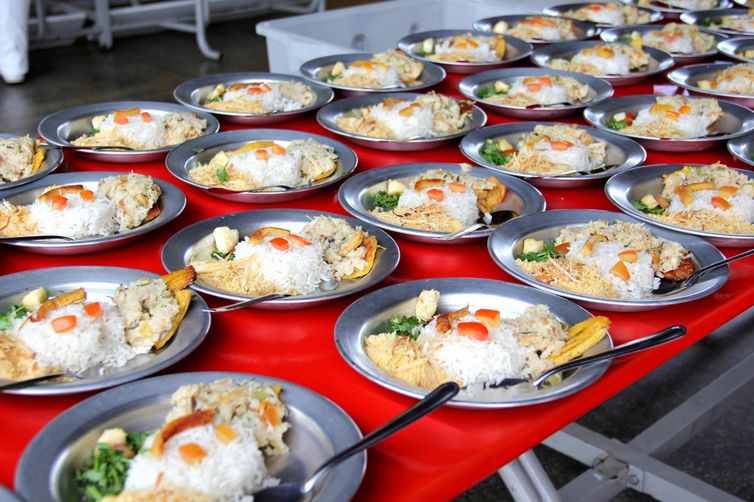
The study also points out inequalities in access to school meals: in the Coque neighborhood of Pernambuco, 91.67 percent of children are enrolled in daycare centers or public schools, yet only 16.33 percent eat lunch at school.
“This was a finding that really caught our attention and raised a red flag, prompting us to understand the reasons behind such widespread resistance to school meals,” Andrea Rangel explained. “We began investigating the quality of the meals and any complaints submitted to the School Meals Council.”

In Caramujo, also in Rio state, the study identified difficulties in food supply. “About 60 percent of respondents take more than 30 minutes to reach shopping locations. This finding reveals the fragility of physical access to food and reinforces the need for measures that ensure food availability and quality in these areas,” Rangel added.
The profile of the families surveyed underscores their social vulnerability: 89 percent of those responsible for food provision are women, most of them black, and households have an average of four members.
Despite these challenges, schools emerge as a strategic space for food security. Among the children surveyed, 89.81 percent are enrolled, and more than half (53 percent) eat meals at school.
School meal participation is also significant, with 64.47 percent of respondents reporting high adherence. However, factors such as police operations and school closures directly affect access to food, compromising an essential social safety net.